
Future of Corporate Risk
A Strategic Foresight and Market Report
For much of the past decades, the risks organisations faced were mostly legible: market cycles, competitive disruption, regulatory shifts, the occasional geopolitical shock.
Today, the forces shaping the next decade are not modifications of what came before. They are structural breaks. The geopolitical order that underpinned global trade is fracturing. Digital infrastructure is becoming an arena of conflict. The climate crisis is creating physical and financial risks that were not priced into the assets and systems built over the last century. And across societies, the trust in institutions, expertise and shared facts that democratic governance depends on is eroding in ways that have no recent precedent.
Each of these forces has a different tempo and a different mechanism. Together, they are creating a risk environment that requires a broader scope than annual risk registers typically provide. This report examines five domains — geopolitical, digital, climate, organisational, and financial — drawing on current market intelligence and longer-horizon foresight to trace where each is heading and what it means for corporate strategy.
Download the report
What’s inside the report?
The report is organised around five thematic chapters, with each chapter presenting both current market indicators and longer-term foresight analysis.
1. Geopolitical & Geoeconomic Risks
Rival economic blocs are consolidating. Sanctions regimes, regulatory divergence, and the politics of friendshoring are forcing multinationals to make structural bets. This chapter examines what the fracturing of the multilateral system means for trade exposure, supply chain configuration, and long-range regulatory strategy.
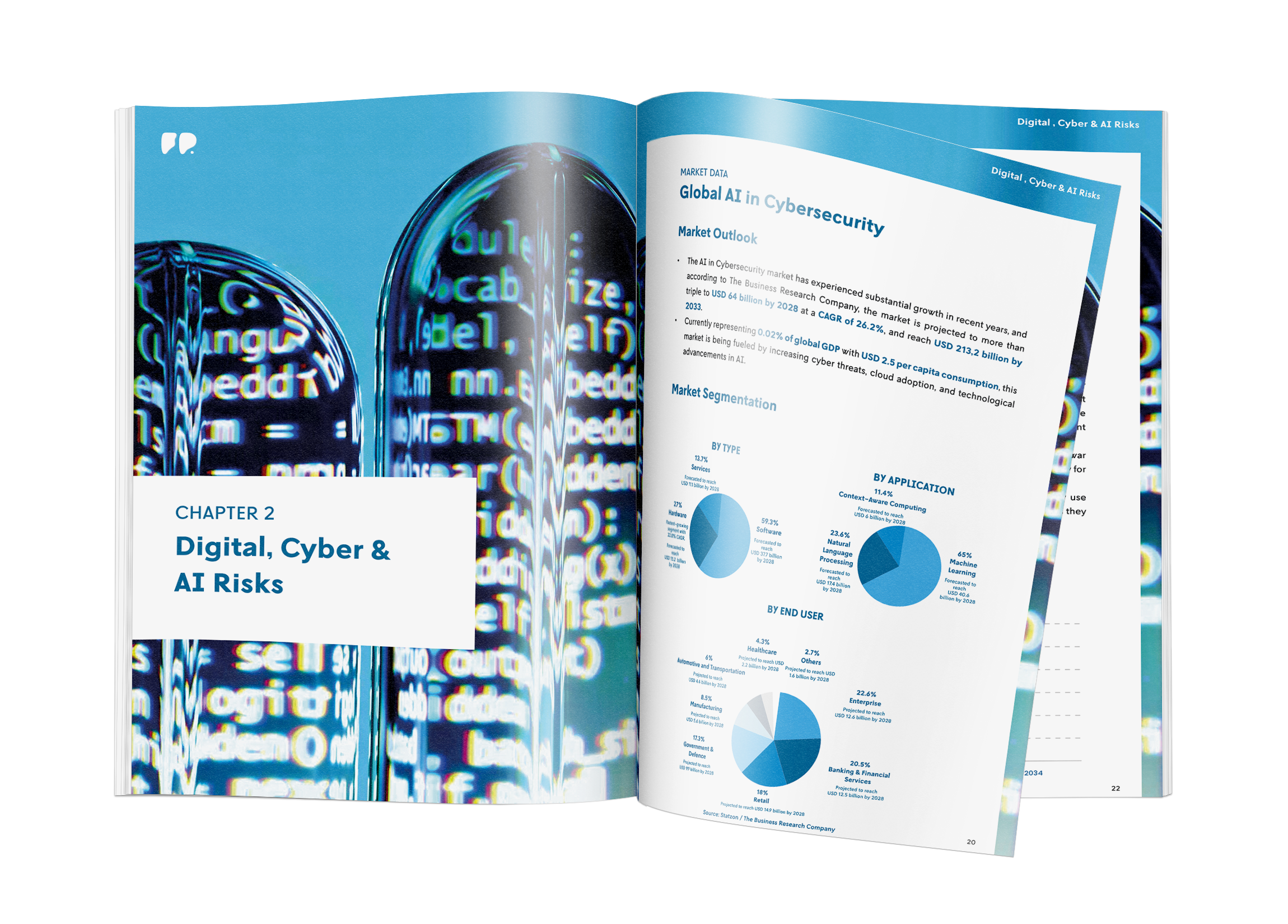
2. Digital, Cyber & AI-Driven Risks
A handful of technology companies now control the infrastructure, models, and platforms that most organisations depend on. AI is being embedded in core systems before adequate liability frameworks are in place. This chapter examines data integrity risk, platform dependency, and the emerging questions around AI and digital systems.
3. Climate & Environmental Risks
Climate litigation has become a mainstream legal risk, with cases active across dozens of jurisdictions. Insurance markets are pricing out coastal assets. Land subsidence is threatening infrastructure across major urban areas. This chapter traces the trajectory of the climate crisis and the capital demands of adaptation on timescales that will define the next generation of investment decisions.
4. Organisational, Workforce & Cultural Risks
Working-age populations are shrinking across major economies, tightening talent supply at the same moment that AI is accelerating the skills required to compete. Social trust is declining between citizens and institutions, and between employees and employers. This chapter examines the demographic, psychological, and cultural pressures that compound exposure across every other risk domain.
5. Financial, Legal & Reputational Risks
Counterfeit goods are growing faster than the global economy. Robot tax proposals are moving from political pressure into active legislation. Algorithmic convergence has already produced a market crash of historic scale, and regulators are treating AI-driven recurrence as a systemic concern. The chapter examines how reputational, legal, and financial risks are converging in ways that sit outside most conventional risk frameworks.